Ready to get started? Call Total Shade LLC today at (602) 265-0905 or request a free consultation.
Commercial Awning Shade Structures
Branding, Weather Protection, and Extended Outdoor Space for Storefronts, Restaurants, and Commercial Properties
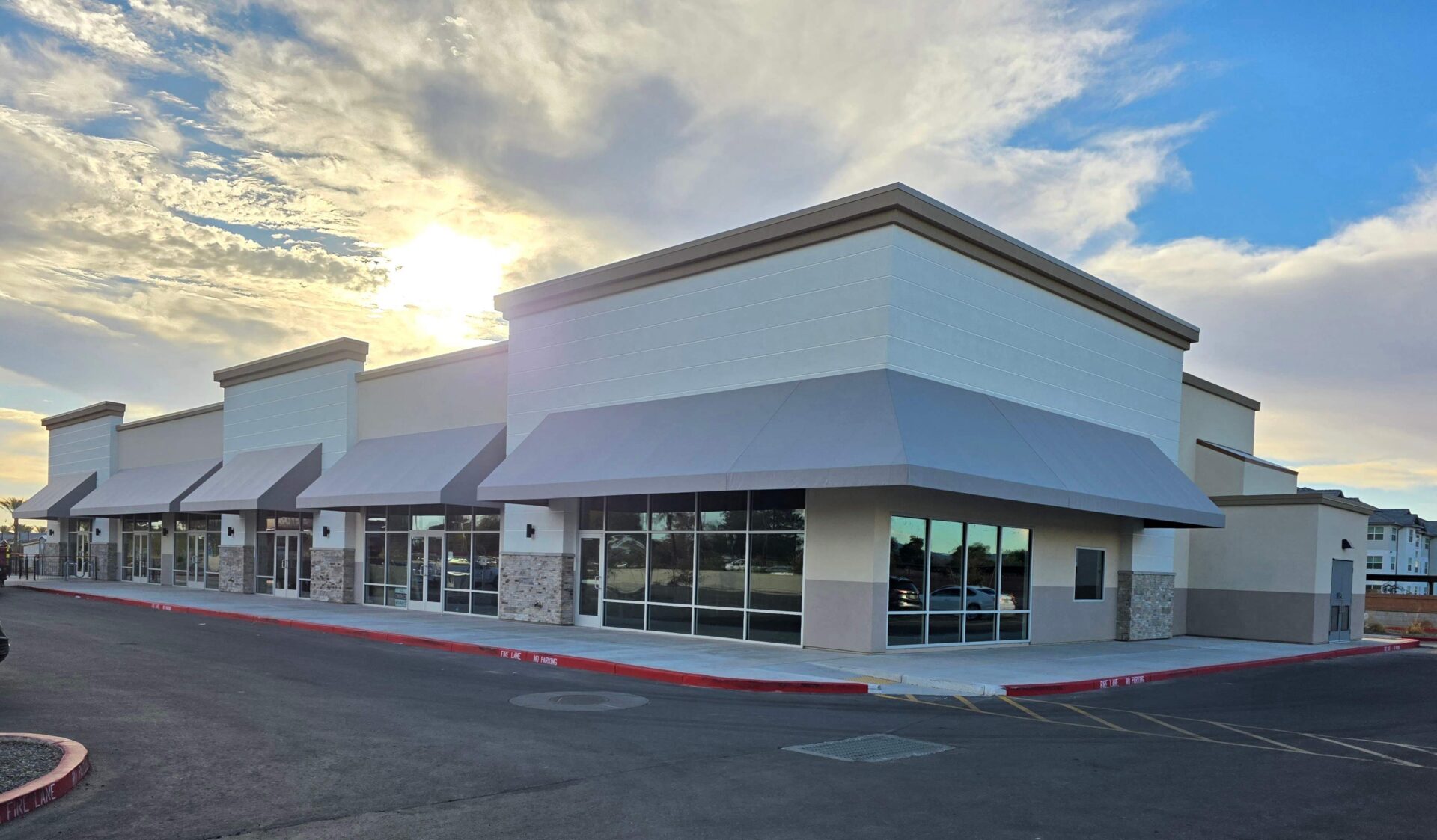
Built for Arizona.
The Ultimate Outdoor Shade Solutions for Arizona’s Sun
A commercial awning does something no other shade structure can: it attaches directly to your building and turns your facade into a working asset. It shades your entry, protects your outdoor seating, reduces your cooling costs, and puts your brand name and colors on the street where every person walking or driving past can see them. For restaurants, retail storefronts, hotels, office buildings, healthcare facilities, and schools, an awning is one of the most cost-effective improvements a property can make — delivering shade, weather protection, energy savings, and marketing visibility in a single installation.
At Total Shade LLC, we design, fabricate, and install commercial awning systems built for the demands of Arizona’s desert climate. With over 25 years of experience across the Southwest, we understand what it takes to build awnings that look sharp on the street, resist fading and degradation under extreme UV, survive monsoon wind events, and continue performing a decade or more after installation.
This page covers everything you need to evaluate: what separates a commercial awning from a residential one, the configurations and mounting options available, where awnings create the most value, materials and durability in Arizona conditions, code and permitting considerations, and how to think about cost and return on investment.
Our Hypar Shade Structures
What Is a Commercial Awning?
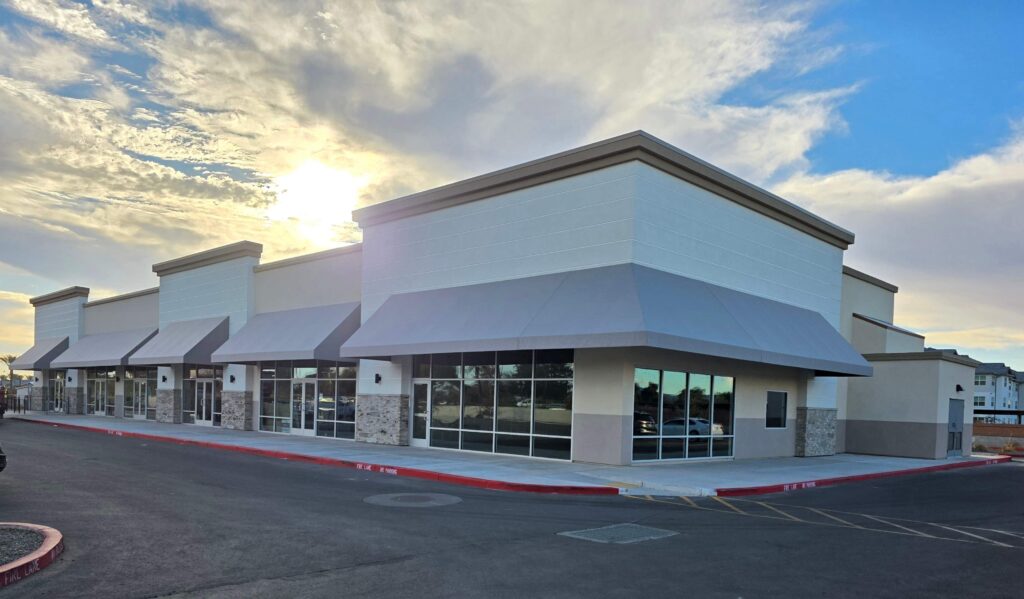
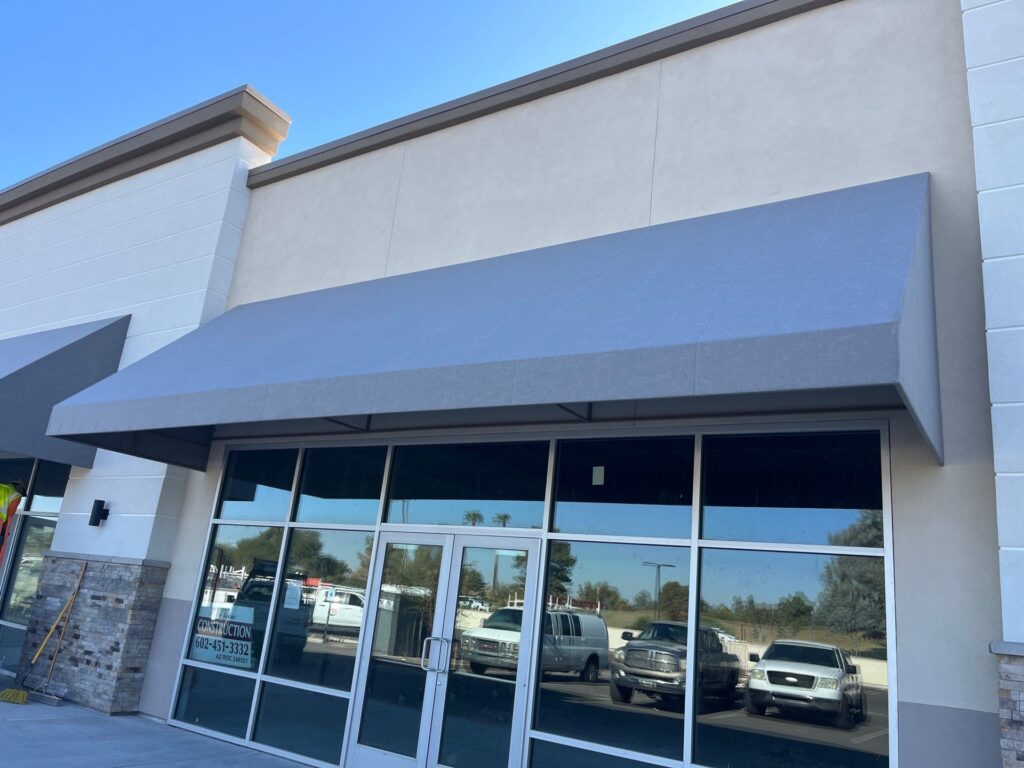
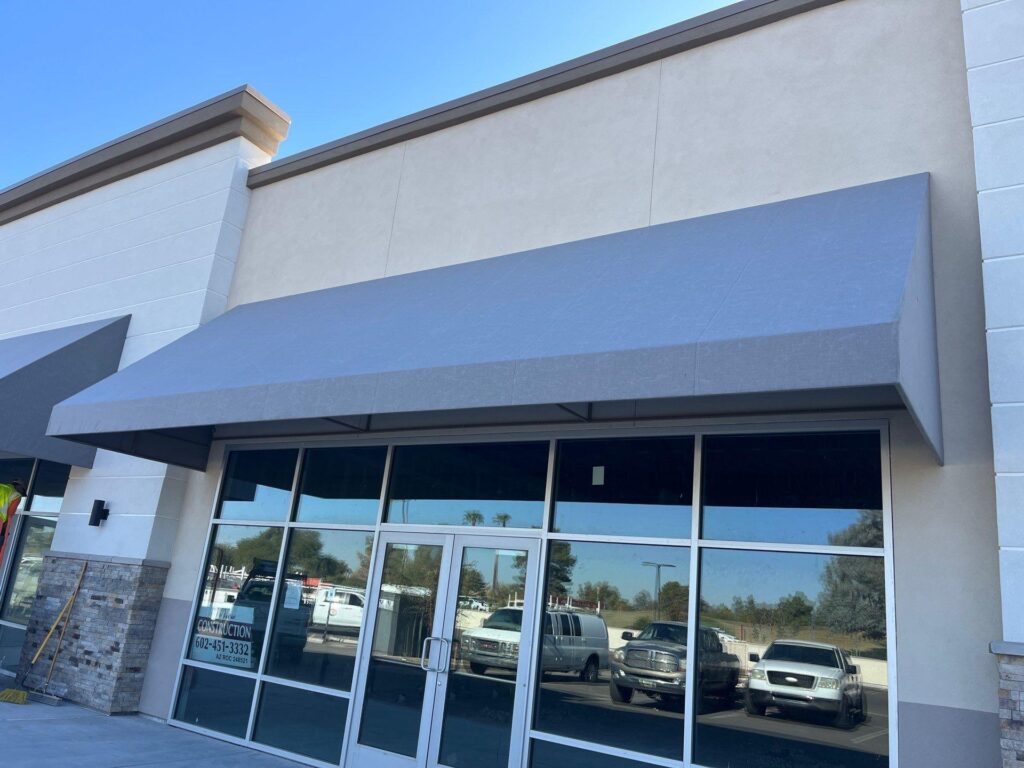
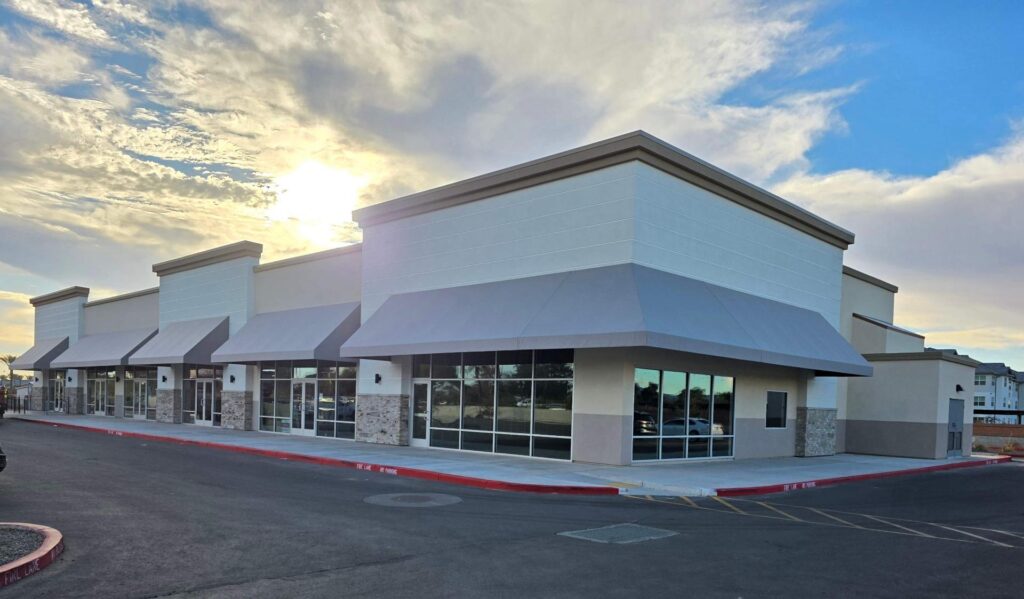
A commercial awning is a building-mounted shade canopy that projects outward from a wall or facade to shade windows, doors, walkways, or outdoor seating areas below. Unlike freestanding shade structures that rely on independent columns and footings, awnings attach directly to the building’s structural framing and use that connection as their primary support.
Commercial awnings differ from residential versions in their construction, materials, and intended service life. Commercial frames use heavier-gauge steel or aluminum with powder-coated or anodized finishes rated for years of outdoor exposure. Commercial fabrics are UV-stabilized and solution-dyed for colorfastness — critical in Arizona, where lesser fabrics fade to a washed-out version of themselves within a single season. And commercial awnings are engineered to handle the wind loads, building attachment forces, and code requirements that residential products are not designed to meet.
Total Shade builds commercial awnings in several configurations depending on the application:
- Fixed frame awnings — Permanently mounted structures with a rigid steel or aluminum frame and tensioned fabric canopy. These are the most common commercial configuration, offering a clean architectural profile with no moving parts to maintain or fail. Fixed awnings are ideal for storefronts, building entries, and window shading where consistent year-round coverage is needed.
- Extended canopy awnings — Larger projections that shade entire outdoor dining areas, walkways, or queuing zones. These may use supplemental posts or tension cables at the leading edge to support wider spans while still anchoring to the building wall.
- Custom and shaped awnings — Curved, angled, or multi-segment designs that follow irregular building facades, wrap corners, or create distinctive architectural features that reinforce brand identity.
Why Awnings Create Commercial Value
Awnings occupy a unique position in the commercial shade landscape: they are simultaneously a shade structure, a weather barrier, an energy-efficiency improvement, and a branding platform. Here is how each of those functions creates measurable value:
Brand Visibility and Street Presence
A commercial awning is one of the most prominent surfaces on any building facade. The canopy face, the valance, and the side panels are all available for custom colors, logo printing, and brand typography. Unlike a sign that simply displays a name, an awning communicates brand identity through its shape, color, and material quality while simultaneously serving a functional purpose. For restaurants, retail stores, and service businesses, the awning is often the single most visible element that differentiates the storefront from its neighbors on a busy commercial street.
Extended Usable Outdoor Space
Awnings transform previously unusable outdoor areas — sidewalk frontage, building entries, and patio zones — into protected, revenue-generating space. Restaurants add covered outdoor seating that stays comfortable during light rain and intense sun. Retailers extend merchandise displays and queuing areas beyond the storefront. Hotels shade their entries and drop-off zones for arriving guests. In Arizona, where outdoor space is unusable for much of the day during summer months without shade, an awning can effectively add hundreds of usable square feet to a commercial property for a fraction of the cost of enclosed construction.
Energy Savings
Awnings placed over south- and west-facing windows and glass doors intercept solar heat before it enters the building, reducing interior temperatures and air conditioning loads. In Arizona’s climate, where cooling costs are a significant portion of commercial operating expenses, properly placed awnings can deliver measurable energy savings that contribute to the structure’s return on investment year after year.
UV Protection and Public Safety
The Centers for Disease Control and Prevention (CDC) recommends shade as a primary defense against ultraviolet radiation, particularly for outdoor areas where people spend extended time in the sun. For commercial properties with outdoor seating, queuing areas, or building entries exposed to direct sun, awnings provide the targeted overhead coverage the CDC recommends.
The U.S. Environmental Protection Agency (EPA) reports that one in five Americans will develop skin cancer, with unprotected UV exposure being the most preventable risk factor. The EPA advises seeking shade during peak UV hours between 10 a.m. and 4 p.m. — the same hours when commercial foot traffic, outdoor dining, and customer interaction peak.
For employers with outdoor-facing staff — servers, hosts, valets, security, maintenance crews — OSHA’s Water-Rest-Shade guidelines identify shade as a core element of heat illness prevention. An awning over a service window, valet station, or building entry provides shade exactly where staff spend their time.
Common Applications
Commercial awnings serve a wide range of property types and functions:
- Restaurants and cafes — Shading outdoor dining areas, protecting diners from sun and light rain, and branding the streetfront with custom colors and logos. Awnings extend the usable hours and seasons of outdoor seating — directly increasing revenue capacity.
- Retail storefronts — Creating a recognizable, branded facade that attracts foot traffic while shading window displays and protecting merchandise from sun damage. Awnings also shade the entry zone, making the transition from bright outdoor sun to interior lighting more comfortable for customers.
- Hotels, resorts, and hospitality venues — Shading entries, valet areas, pool-adjacent walkways, and outdoor lounge spaces. Awnings reinforce the property’s brand and signal a higher level of care and quality to arriving guests.
- Office buildings and corporate campuses — Shading building entries, outdoor break areas, and south/west-facing glazing to reduce cooling loads and improve occupant comfort.
- Healthcare facilities — Protecting patient drop-off zones, wheelchair-accessible entries, and outdoor waiting areas from sun and rain.
- Schools and institutional facilities — Shading building entries, covered walkway connections between buildings, and outdoor instructional or gathering areas.
- Churches, community centers, and event venues — Covering entries, outdoor reception areas, and gathering spaces.
Browse completed awning and shade installations in our project gallery.
Materials and Construction
Steel and Aluminum Frames
Total Shade fabricates commercial awning frames from structural steel or heavy-duty aluminum in our Phoenix facility. After fabrication, steel components are powder coated to a minimum of 3 mil thickness, providing a hard, corrosion-resistant finish that withstands decades of Arizona sun and weather. Aluminum frames may be powder coated or anodized depending on the application and aesthetic requirements.
We offer over 25 standard powder coat colors with custom color matching available, so the frame finish coordinates with your building facade, brand palette, and signage.
Awning Fabric
Commercial awning fabric must deliver UV protection, colorfastness, and weather resistance far beyond what residential-grade materials can provide. We specify UV-stabilized, solution-dyed fabrics — including acrylics and coated polyesters — selected for each project’s specific requirements. Solution-dyed fabrics hold their color throughout the material, not just on the surface, which is why they resist the fading that destroys screen-printed or surface-dyed fabrics within a season or two of Arizona sun.
For applications requiring waterproof rather than water-resistant performance, we specify vinyl-coated polyester and other impermeable fabrics that shed rain completely while still providing UV protection and colorfastness.
Where fire ratings are required — near grills, heaters, or building facades in jurisdictions that mandate flame-retardant materials — we offer FR-rated fabrics certified to NFPA 701 and CSFM 1237.1.
Custom colors, logo printing, and brand graphics can be applied to the canopy face, valance, and side panels, turning the awning into a permanent, weather-resistant brand display.
When awning fabric wears out before the frame does, our in-house sewing team can fabricate replacement canopy fabric to extend the life of your existing frame.
Mounting and Attachment
Commercial awnings attach directly to the building’s structural framing — not to decorative cladding, thin-gauge metal panels, or non-structural surfaces. The attachment method depends on the building’s construction type (steel frame, concrete, masonry, wood) and the loads the awning will impose. Our engineering team specifies the connection details based on the specific building structure, awning projection, and local wind load requirements.
For larger awning projections or extended canopy systems, supplemental support may include tension cables from above, knee braces from the wall below, or support posts at the leading edge where freestanding capability is needed.
Design Considerations for Arizona’s Climate
Arizona’s desert climate creates specific challenges for commercial awnings that do not apply in milder regions:
- UV intensity and fabric degradation — Arizona’s UV index regularly reaches extreme levels. Fabrics without proper UV stabilization and solution-dyed construction will fade and degrade within a single season. We specify commercial-grade, solution-dyed fabrics with documented UV performance and manufacturer warranties against degradation.
- Wind loads and monsoon events — Fixed awnings must be engineered to resist local wind loads, including the sudden, violent gusts that Arizona’s monsoon season produces. Frame rigidity, attachment strength, and fabric tensioning all factor into wind performance. Improperly attached awnings that tear away from buildings during storms create property damage, liability, and safety hazards.
- Heat on materials and surfaces — Metal frames and fabric can reach extreme temperatures during summer months. Powder-coated finishes reduce heat absorption compared to bare or dark-painted metal. Fabric selection and color affect how much heat the canopy absorbs and re-radiates into the space below.
- Facade orientation — South- and west-facing facades receive the most intense and prolonged sun exposure. Awning placement on these facades delivers the greatest return in energy savings, occupant comfort, and UV protection. North-facing awnings still provide rain and glare protection but contribute less to cooling load reduction.
- Drainage and pitch — Even “flat” awnings require sufficient pitch to drain rainwater during monsoon downpours. Ponding water on an awning fabric creates dangerous weight loads and accelerates fabric deterioration. We design every awning with proper pitch and, where needed, integrated guttering to direct runoff away from entries and pedestrian zones.
Codes, Permitting, and Signage Regulations
Commercial awnings can trigger multiple regulatory requirements depending on the jurisdiction, building type, and how the awning is used:
- Building permits — Most Arizona municipalities require permits for building-mounted shade structures. The permit review evaluates attachment method, structural capacity of the host building, wind load resistance, and code compliance.
- Signage and zoning codes — Awnings with logos, text, or brand graphics may be classified as signage under local zoning ordinances, which can impose size limits, placement restrictions, illumination rules, and permit requirements separate from the structural permit.
- Projection over public right-of-way — Awnings that extend over public sidewalks or streets may require encroachment permits, minimum clearance heights, and liability insurance documentation.
- Fire code — Awnings near cooking equipment, heaters, or enclosed spaces may need FR-rated fabrics and specific clearances.
- ADA compliance — Awning support posts, guy wires, and valance heights must not create obstructions along accessible routes.
Total Shade provides sealed structural engineering drawings for awning projects that require them, and we navigate the permitting process — including coordination with building, zoning, and signage departments — as part of every commercial project.
Understanding Total Cost of Ownership
Commercial awnings represent one of the most cost-effective facade improvements a business can make, but the total investment extends beyond the unit price. Buyers should evaluate cost in the context of the energy savings, additional revenue from outdoor space, and brand visibility the awning delivers over its expected 10 to 15+ year service life.
| Cost Category | What It Includes | Why It Matters |
|---|---|---|
| Awning Structure | Steel or aluminum frame, powder coat finish, mounting hardware, attachment brackets | Frame quality and attachment engineering are the structural backbone; this is where longevity is determined |
| Fabric & Graphics | Solution-dyed or coated canopy fabric, custom color matching, logo and brand graphics | Fabric quality drives UV performance, colorfastness, and how long the awning looks new; graphics turn shade into marketing |
| Engineering & Permits | Structural drawings, wind load analysis, building attachment details, permit and signage applications | Required for code compliance; signage classification can add permitting complexity |
| Installation | Mounting to building structure, fabric tensioning, any supplemental support installation | Building height, substrate type, and access conditions affect installation complexity and cost |
| Ongoing Maintenance | Periodic fabric cleaning, hardware inspection, frame touch-up, eventual fabric replacement (typically every 7-12 years) | Properly maintained awnings last 10-15+ years on the frame; fabric replacement extends life without replacing the structure |
| Energy Savings (Offset) | Reduced cooling loads from shading south/west glazing and building surfaces | In Arizona’s climate, awning-related cooling savings accumulate over the life of the structure, partially offsetting the investment |
Awnings vs. Other Shade Options
Awnings serve a fundamentally different function than freestanding shade structures. Here is how they compare on the factors commercial buyers weigh most:
| Factor | Commercial Awnings | Freestanding Shade Structures |
|---|---|---|
| Mounting | Building-attached; no ground footings required | Independent columns with concrete footings |
| Branding | Excellent — logo printing, brand colors, and text on canopy, valance, and side panels | Limited to fabric and post color selection |
| Coverage area | Limited by projection from building wall (typically up to 12-15 feet without supplemental support) | Larger spans possible (20-60+ feet depending on structure type) |
| Energy savings | Direct reduction in solar heat gain through windows and building surfaces | Indirect; shades people and surfaces but does not directly reduce building heat gain |
| Weather protection | Can provide rain protection with waterproof fabric and proper pitch | Most use permeable HDPE; rain passes through |
| Site requirements | Requires a structurally adequate building wall for attachment | Can be installed anywhere with suitable soil for footings |
Many commercial properties use both: awnings over building entries, windows, and storefront dining areas, combined with freestanding structures like hip shades, tensioned sails, or umbrellas for open areas away from buildings. We help you determine the right combination during consultation.
What to Compare When Evaluating Proposals
| Your Question | What You’re Really Comparing | Why It Matters |
|---|---|---|
| Will it hold its color? | Solution-dyed vs. surface-dyed fabric; UV stabilization quality | A faded awning hurts your brand more than no awning at all; colorfastness is non-negotiable in Arizona |
| Is the attachment engineered? | Sealed drawings showing connection to building structure vs. generic bracket mounting | Improperly attached awnings tear away in wind events, damaging the building and creating liability |
| Does it meet code? | Building permit, signage permit, right-of-way encroachment, fire rating where required | Non-compliant installations can be ordered removed by inspectors; signage violations carry fines |
| What frame material? | Steel or aluminum gauge, powder coat thickness, hardware quality | Frame durability determines whether the awning lasts 5 years or 15+ |
| Can the fabric be replaced? | Whether the vendor can supply matching replacement fabric for the specific frame | Fabric replacement extends the life of the frame for years beyond the original canopy’s service life |
| What’s the total investment? | Structure + fabric + graphics + engineering + install + maintenance over 10-15 years | Evaluate against energy savings, additional outdoor revenue, and brand visibility value |
Why Work with Total Shade LLC?
- 25+ years of commercial shade experience — We have designed and installed awning systems for restaurants, retailers, hotels, schools, healthcare facilities, and corporate properties across Arizona and the Southwest.
- In-house fabrication — Steel and aluminum frame fabrication, powder coating, and fabric cutting and sewing are done by our own teams in Phoenix. No middlemen, no outsourced quality.
- Custom branding capability — We produce awnings with custom colors, logo printing, and brand graphics that turn your shade into a permanent marketing asset.
- OSHA-certified installation crew — Building-mounted installations require work at height, structural connections, and coordination with building systems. Our field team is trained and certified to the highest safety standards.
- Replacement fabric and re-skinning — Our in-house sewing facility can produce replacement canopy fabric when your awning’s skin reaches end of life, extending the value of your frame for years.
- Single source for all shade types — If your property needs awnings on the building and a hip structure over the parking lot, we handle both under one contract. Explore our full range of shade products, including hypar structures, cabanas, ramadas, and custom designs.
Read what our clients say on our testimonials page.
Get a Free Consultation for Your Awning Project
Whether you need a single storefront awning or a multi-building awning program for an entire commercial property, Total Shade LLC is here to help. We will evaluate your building, discuss your shade, branding, and energy goals, recommend the right materials and configuration, and provide a detailed proposal — all at no cost or obligation.
Call us today: (602) 265-0905
Email: info@totalshadellc.com
Submit a Project Inquiry Online →
Total Shade, Total Solution!