3-pt Tensioned Fabric Sails

Sculptural Shade Solutions for Playgrounds, Pools, Patios, and Commercial Spaces
blue 3-pt Tensioned Fabric Sails
Built for Arizona.

The Ultimate Outdoor Shade Solution for Arizona’s Sun

Not every site calls for a rectangular canopy on four posts. When a project needs architectural character, creative coverage over an irregular space, or a dynamic visual statement that still delivers serious UV protection, the 3-point tensioned fabric sail is one of the most effective shade solutions available. Its triangular form can be angled, layered, and combined in ways that rigid structures simply cannot match—wrapping shade around corners, bridging gaps between buildings, and turning functional sun protection into a design feature that enhances the property.

At Total Shade LLC, we have designed, fabricated, and installed tensioned fabric sails for over 25 years across Arizona and the Southwest. Every sail we build is engineered for local wind and seismic loads, fabricated from commercial-grade HDPE shade cloth in our Phoenix facility, tensioned on powder-coated steel posts, and installed by our OSHA-certified crew. This page covers everything a commercial buyer needs to know about 3-point sails—from geometry and performance to materials, engineering, cost, and why the details matter in a desert climate.

Our 3-Point Tensioned Fabric Sail

What Is a 3-Point Tensioned Fabric Sail?

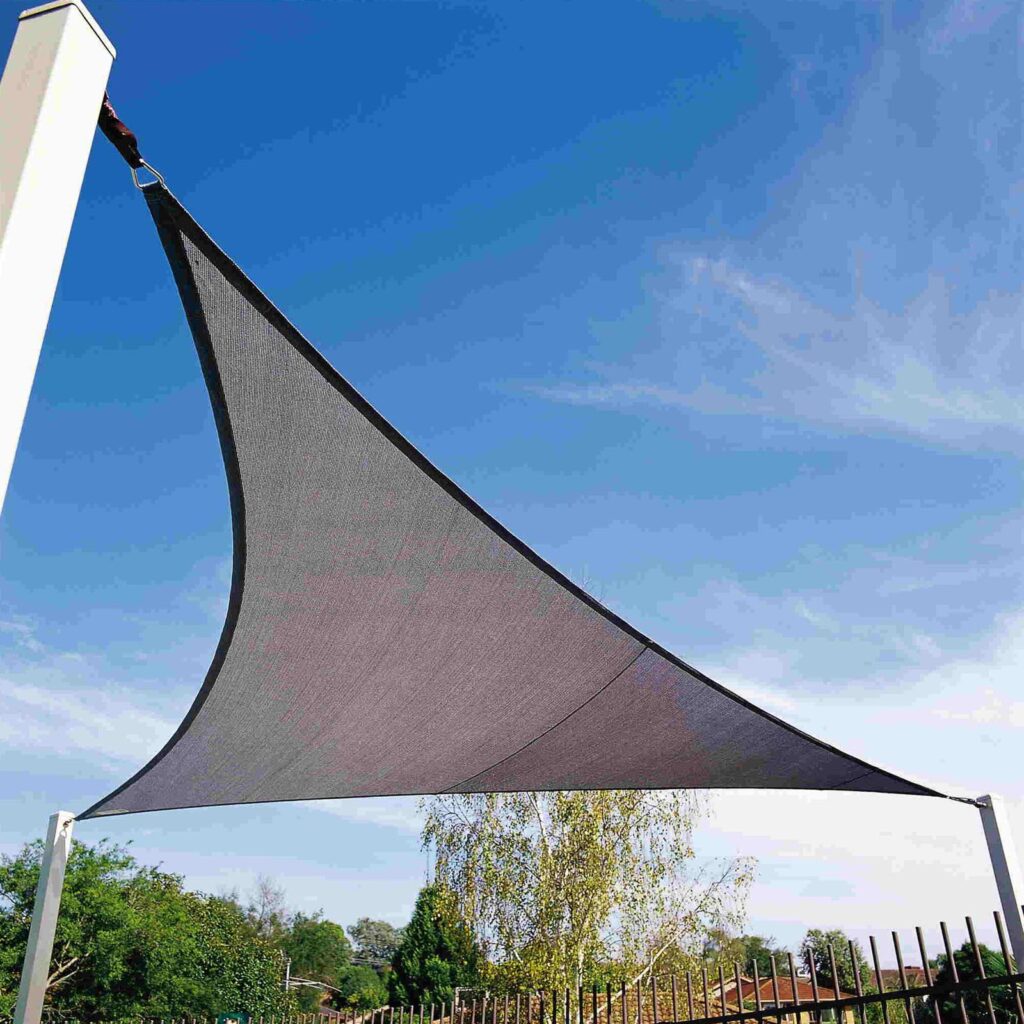
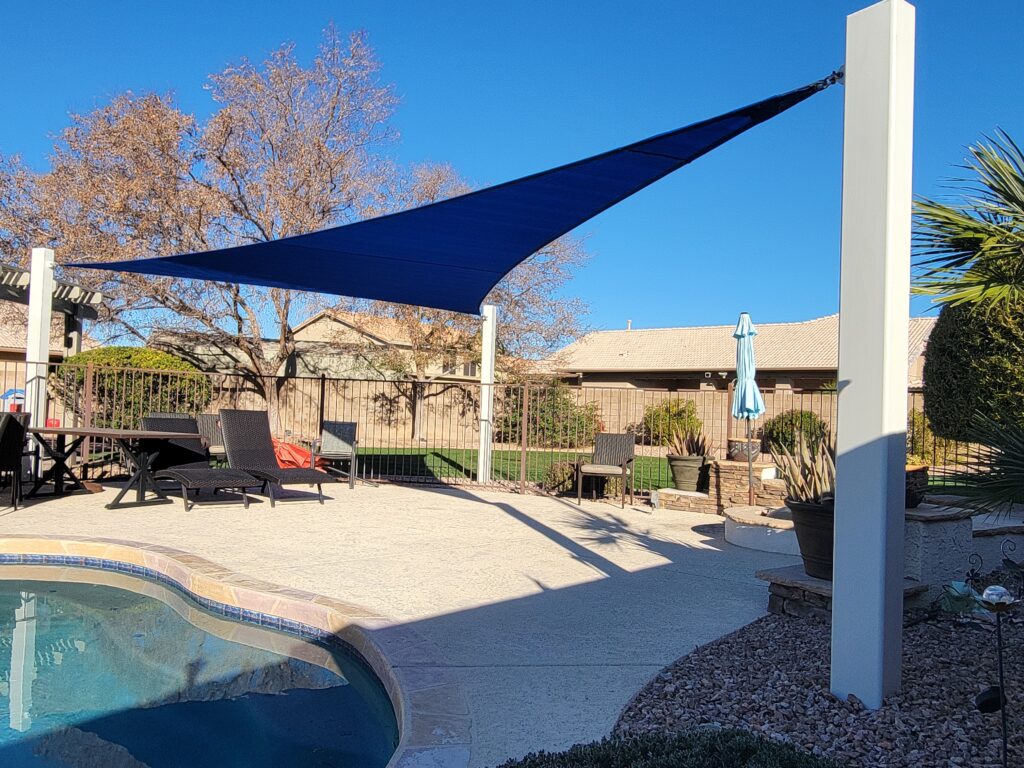
A 3-point sail is a triangular tension membrane stretched between three anchor points—typically steel columns, though one or more corners can attach to existing buildings or other structures. The fabric is cut and sewn to precise dimensions, then tensioned at each corner using stainless steel hardware (turnbuckles, shackles, and mounting plates) until the sail achieves a taut, sculpted form.

What gives the triangular sail its distinctive look and structural stability is the hyperbolic paraboloid shape created by varying the height of each attachment point. When one corner sits higher than the other two (or vice versa), the fabric develops a graceful twist that accomplishes two critical things: it sheds rainwater naturally instead of pooling, and it pre-loads the membrane with tension that helps it resist wind uplift and flutter.

A general rule of thumb for proper drainage and tension is approximately 1 foot of height difference for every 5 feet of horizontal run between the high and low corners. Our engineering team calculates the exact geometry for each project based on sail size, site conditions, and load requirements.

For projects that need four-corner coverage or a more traditional rectangular footprint, our 4-point tensioned fabric sails and hip shade structures are also available.

Why Choose a 3-Point Sail Over Other Shade Structures?

Every shade structure type has strengths. The 3-point tensioned sail excels in situations where other designs fall short:

  • Irregular or constrained spaces – Triangular sails fit into corners, L-shaped areas, and oddly shaped sites where rectangular canopies would leave gaps or require awkward post placement.
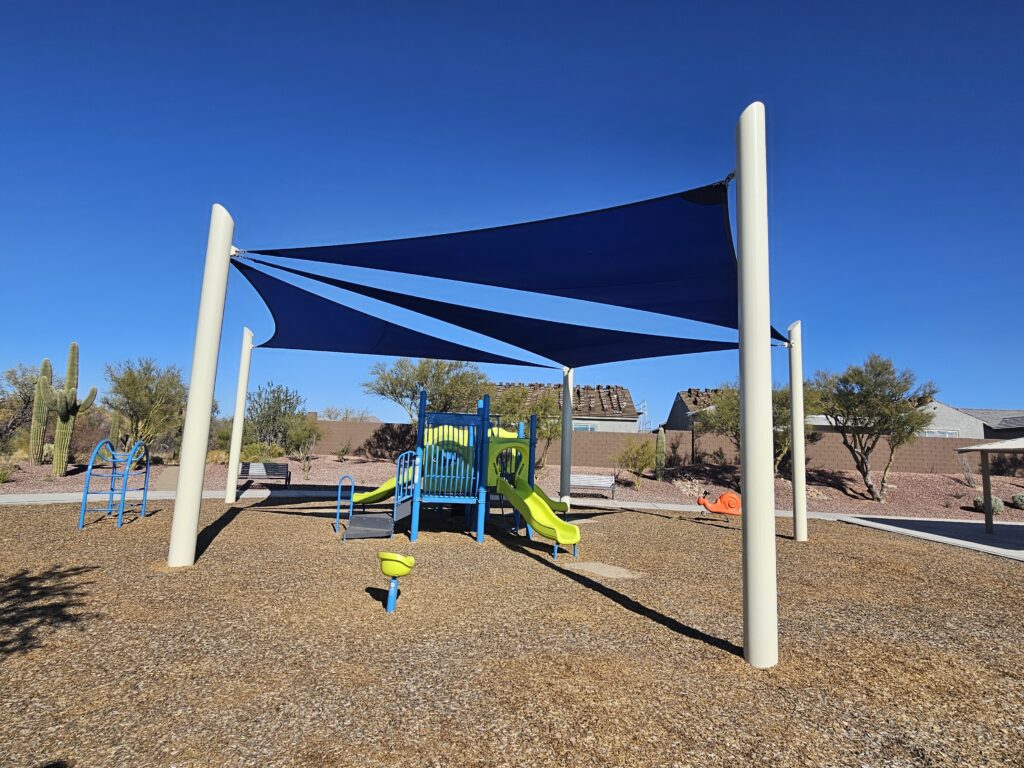
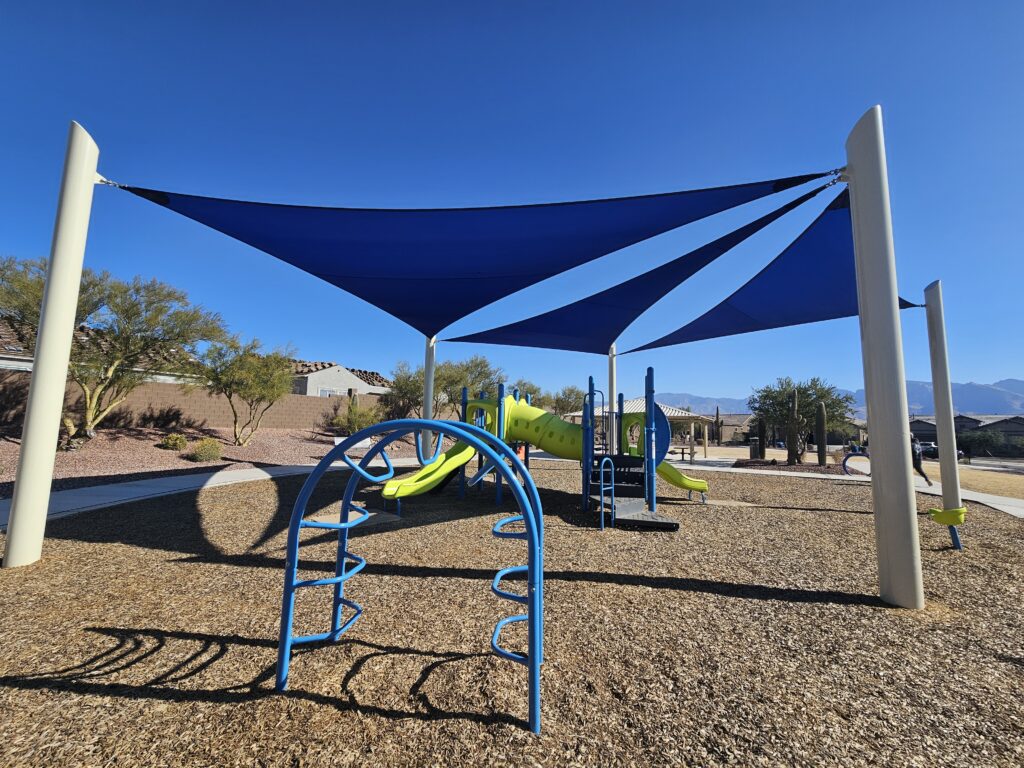
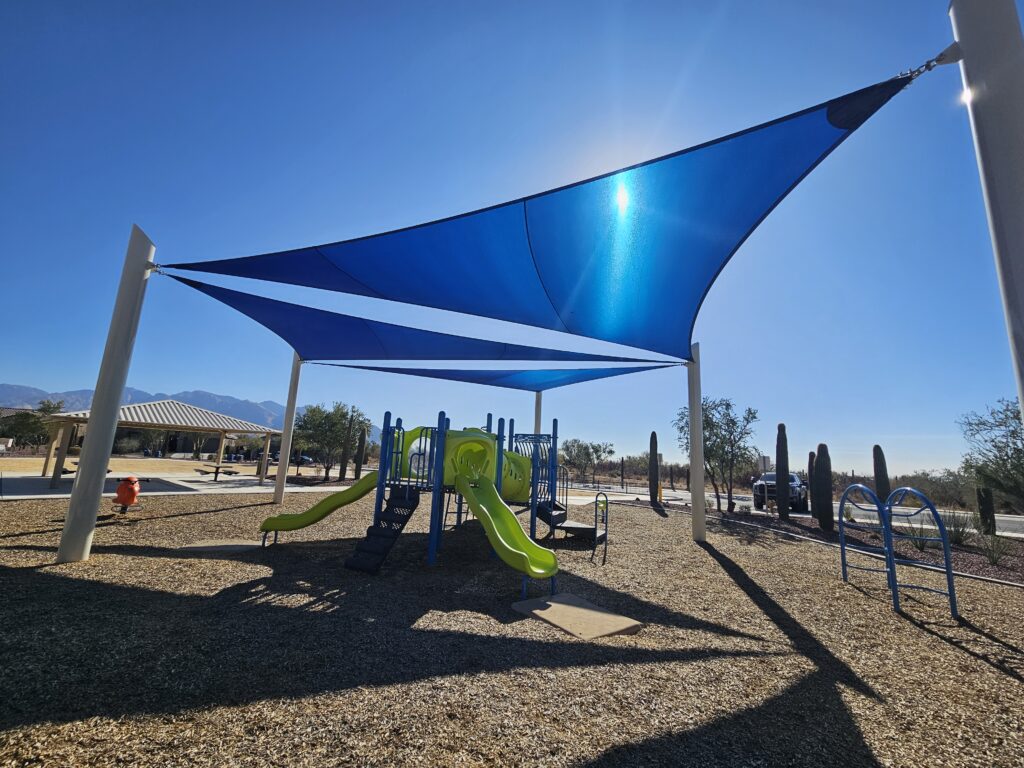
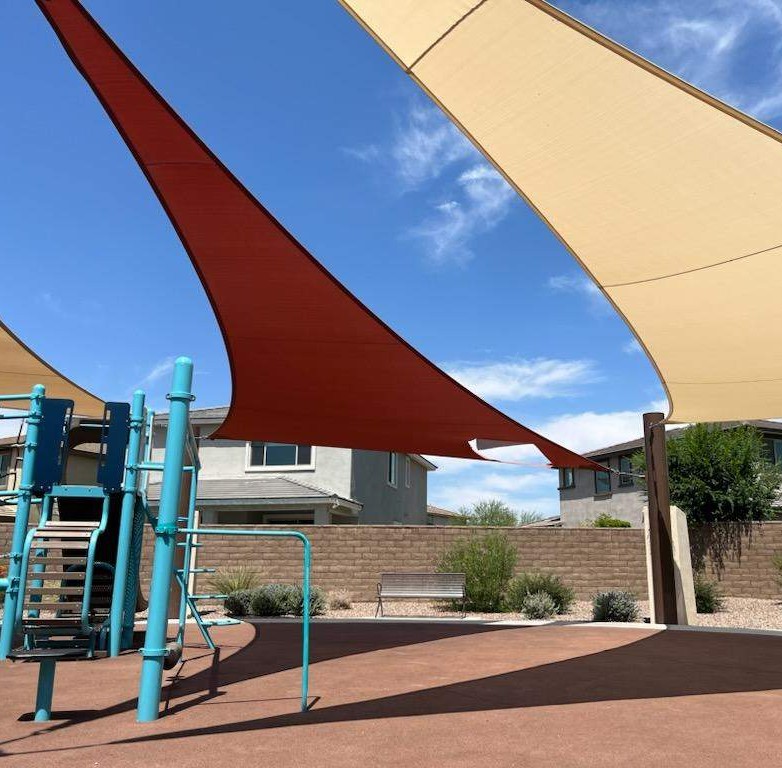
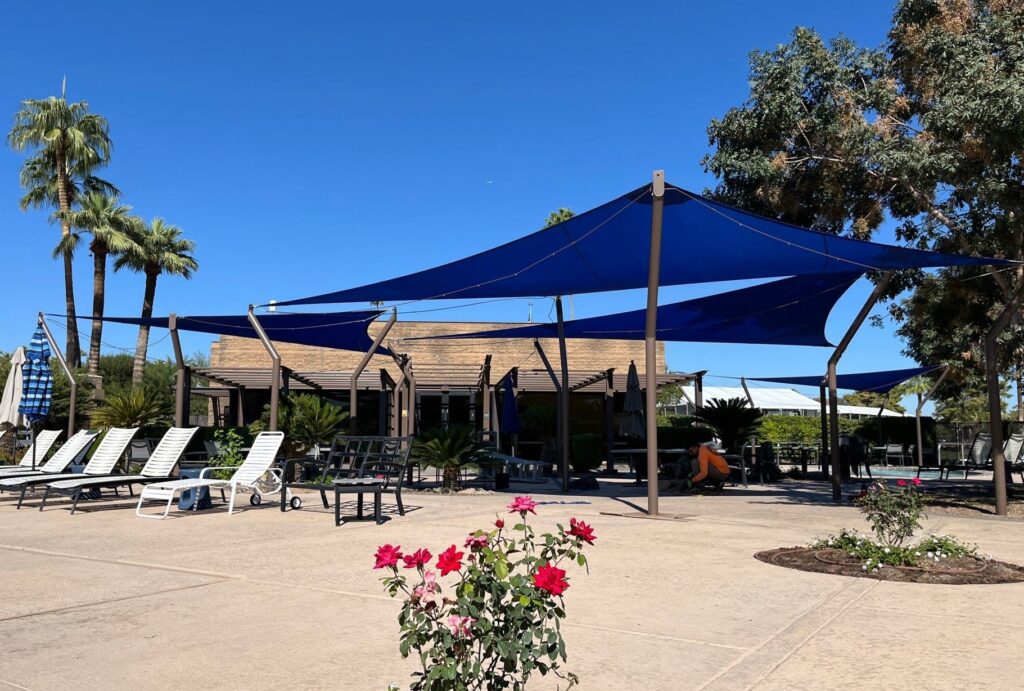
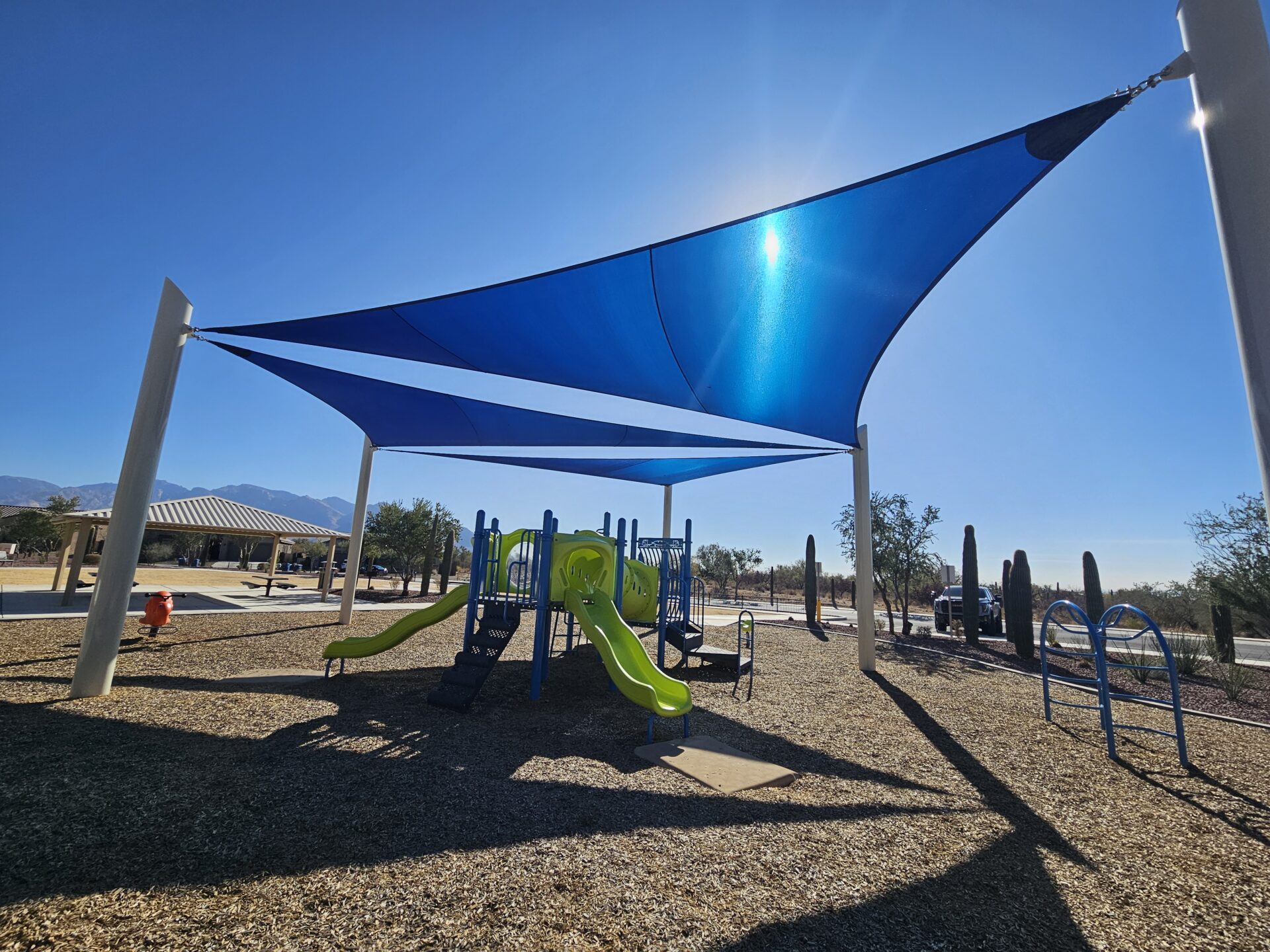
  • Layered, multi-sail configurations – Multiple 3-point sails can be overlapped at different heights and angles to cover large areas while creating depth, visual interest, and better wind performance than a single large membrane.
  • Architectural impact – The sculptural, sweeping form of a tensioned sail transforms functional shade into a design element. Schools, resorts, restaurants, and retail centers use them to create a distinct visual identity.
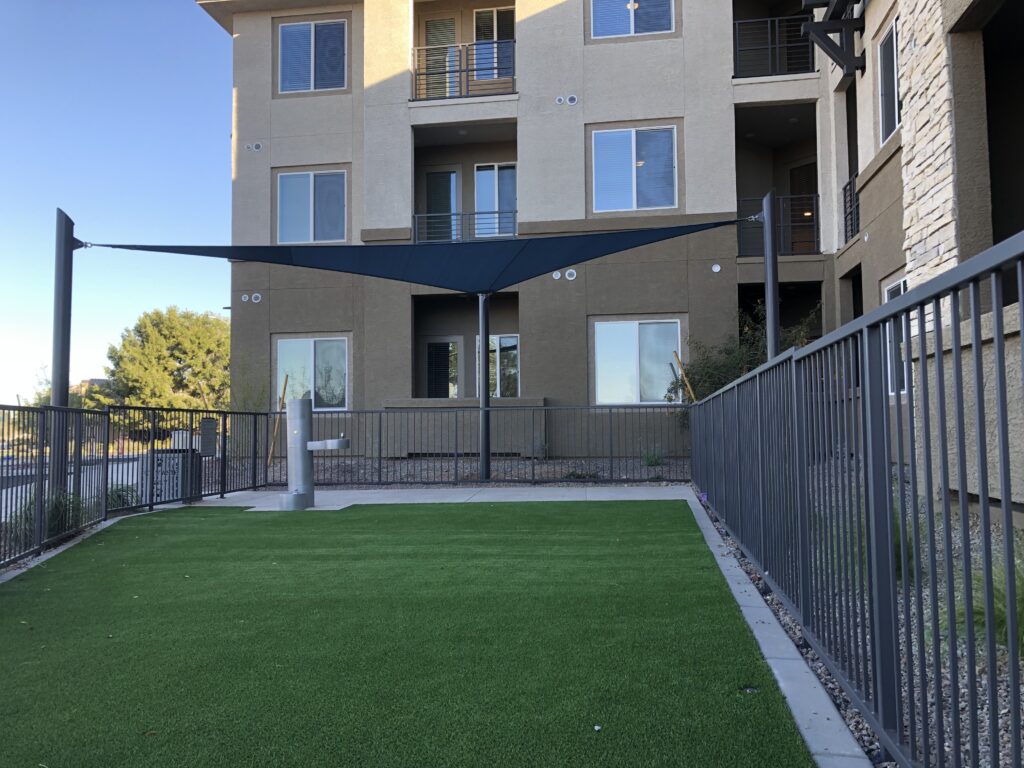
  • Attachment to existing buildings – One or two corners can tie directly into structural framing on an adjacent building, reducing the number of posts needed and connecting the shade canopy seamlessly to the architecture.
  • Better wind behavior at smaller spans – Smaller individual sail panels shed wind more effectively than a single large canopy. In Arizona’s monsoon season, this is a significant advantage.

Common Applications for 3-Point Sails

Tensioned fabric sails are among the most versatile shade solutions in commercial construction. Common installations include:

  • School playgrounds and outdoor classrooms – Layered sails create wide, dynamic shade coverage over play equipment and learning areas while meeting safety clearance requirements.
  • Community and commercial pool decks – Permeable HDPE fabric sheds most rain while allowing airflow, keeping deck areas cool without creating condensation drip issues common with solid roofs.
  • Outdoor dining and hospitality patios – Restaurants, hotels, and resorts use sail configurations to extend usable outdoor seasons and create inviting, shaded environments for guests.
  • Parks, picnic areas, and splash pads – Multi-sail layouts cover irregularly shaped recreation zones that rectangular structures cannot efficiently address.
  • Retail and mixed-use developments – Sails shade walkways, courtyards, and outdoor seating while adding a contemporary architectural element that enhances property aesthetics.
  • Church campuses and HOA amenity areas – Covering gathering spaces, event areas, and children’s play zones with visually striking shade.
  • Theme parks and entertainment venues – Queue lines, concession areas, and spectator zones benefit from multi-sail shade that can follow curved or irregular paths.

Browse completed sail installations in our project gallery.

3-Point Tensioned Fabric Sail Materials and Construction

Shade Fabric
Our primary fabric for tensioned sails is Commercial 340/95, a high-density knitted HDPE shade cloth engineered for commercial tension structures. It delivers up to 96% UV block while remaining fully permeable to air—a critical advantage in Arizona, where breathable fabric allows hot air to escape upward rather than pooling beneath a solid canopy. The permeable weave also sheds roughly 60–70% of rainfall while significantly reducing wind uplift forces compared to waterproof membranes.

Commercial 340/95 is available in three configurations:

  • Standard weight – The workhorse option for most playground, park, pool, and commercial patio applications.
  • Heavy weight – For sites with higher wind exposure or where extra durability is required.
  • FR (Fire Resistant) – Certified to CSFM 1237.1 and NFPA 701, required for installations near buildings in many jurisdictions and in wildfire-prone areas.

We also work with Polyfab, Alnet, and Serge Ferrari fabric lines, giving us the flexibility to match the ideal material to each project’s UV-blocking requirements, fire rating needs, color palette, and budget. All of our HDPE shade fabrics are 100% lead-free, phthalate-free, and backed by manufacturer UV degradation warranties of 10 to 15 years.

For existing sail structures with worn or storm-damaged fabric, our in-house sewing team can fabricate a replacement sail cut to fit your current frame and hardware.

Steel Posts and Framework
The most common failure point in shade sail installations is not the fabric—it is undersized posts, shallow footings, or poor hardware connections. At Total Shade, every sail post is fabricated from structural steel in our Phoenix shop and powder coated to a minimum of 3 mil thickness after fabrication. This creates a hard, corrosion-resistant finish that withstands decades of Arizona sun, monsoon rain, and temperature swings.

Posts are set at a slight outward lean away from the sail center so that the tension loads pull them toward plumb rather than away from it. This engineered lean angle, combined with properly sized concrete footings, ensures the structure handles the sustained tension and dynamic wind loads that fabric sails generate.

We offer over 25 standard powder coat colors with custom color matching available, so your posts complement school colors, corporate branding, or community design standards.

Hardware and Tensioning
Every connection point uses marine-grade stainless steel or hot-dip galvanized hardware—pad eyes, forged shackles, and heavy-duty turnbuckles rated for the specific tension loads of each sail. We do not use improvised S-hooks, light-duty carabiners, or undersized bolts. Each corner is fitted with a turnbuckle that allows precise tensioning during installation and periodic re-tensioning as the fabric naturally relaxes over its first season of use.

Engineering, Wind Loads, and Permitting
Tensioned fabric sails are not decorative accessories—they are engineered structures subject to building codes. In Arizona, commercial shade structures must be designed to meet or exceed the International Building Code (IBC) with wind loads calculated per ASCE 7 and any local amendments. Depending on the jurisdiction and risk category, design wind speeds in the Phoenix metro area typically fall in the 90–115 mph range.

Total Shade provides sealed structural engineering drawings prepared by licensed engineers for every commercial sail project. Our engineering package includes:

  • Site-specific wind and seismic load calculations – based on your project’s geographic location, exposure category, and governing building code
  • Footing and anchor designs – sized for actual soil conditions at your site, not generic assumptions
  • Post sizing and lean angle specifications – calculated to resist the combined tension and wind loads specific to your sail configuration
  • Hardware and connection details – documenting the rated capacity of every shackle, turnbuckle, and mounting plate
  • Complete permit-ready documentation – formatted for submission to your local building department

Many Arizona municipalities require permits for fixed shade structures. Requirements vary by city and county, and some jurisdictions have specific rules about setbacks, height limits, and proximity to property lines. We navigate the permitting process as part of every project so approvals do not become your bottleneck.
Design Considerations for Arizona’s Climate

Installing tensioned sails in the desert Southwest demands attention to factors that do not apply in milder climates:

  • Sun path and orientation – Arizona’s intense summer sun tracks high overhead, but the long afternoon exposure from the west is what makes outdoor spaces unbearable. We orient sails to optimize shade during peak afternoon hours, not just at solar noon.
  • Monsoon wind performance – Sudden, violent wind gusts during monsoon season are the primary threat to fabric structures in Arizona. We address this through proper engineering, post and footing sizing, and by using permeable HDPE fabric that allows wind to pass through the weave rather than loading the sail like a solid panel.
  • Multi-sail layouts over single large spans – Using multiple smaller 3-point sails rather than one massive membrane improves wind resistance, simplifies replacement if a single panel is damaged, and creates more interesting shadow patterns beneath.
  • Height variation for airflow – Keeping the high edge of each sail elevated allows hot air to escape upward. In desert conditions, this natural ventilation is what makes the space beneath the sail feel meaningfully cooler, not just shaded.
  • Clearances around heat sources – Sails must be kept away from fire pits, chimneys, barbecue areas, and HVAC exhaust. We factor these setbacks into every layout.
  • Fabric and hardware longevity – Arizona’s UV intensity and temperature extremes accelerate wear on lesser materials. Our specification of commercial-grade HDPE, stainless hardware, and powder-coated steel is not an upgrade—it is the baseline for structures that will perform for 15 to 25 years in this environment.

Site Planning and Layout
Getting the most shade and visual impact from a 3-point sail installation starts with thoughtful layout. The factors we evaluate during design include:

  • Coverage goals vs. sail geometry – A single triangular sail leaves triangular gaps. We plan multi-sail configurations that overlap and layer to maximize coverage over the actual use area, not just the geometric footprint.
  • Post placement and circulation – Columns must work with pedestrian flow, vehicle access, ADA pathways, and any equipment or furnishings beneath the sails.
  • Building attachment opportunities – Where one or more sail corners can tie into an adjacent building’s structural framing, we reduce post count, lower cost, and integrate the shade system with the architecture.
  • Underground utilities – Post footings require excavation. We identify below-grade conflicts early so locations can be adjusted during design rather than discovered during construction.
  • Color and aesthetic coordination – Sail color affects both the look and the UV performance of the installation. Darker fabrics block more visible light but can feel heavier visually; lighter colors transmit more light for a brighter feel underneath. We help you balance aesthetics with performance.

If a 3-point sail is not the right fit for your site, explore our full range of shade products, including hip structures, hypar sails, flat cantilevered structures, and custom designs.

Understanding Total Cost of Ownership

The installed price of a tensioned sail is only the starting point. Commercial buyers should evaluate the full cost of ownership over the structure’s expected 15 to 25 year lifespan. The table below outlines the major cost categories.

Cost Category What It Includes Why It Matters
Sails & Fabric HDPE shade cloth cut and sewn to spec, including edge reinforcement, webbing, and corner plates Fabric quality drives UV performance, wind resistance, and replacement interval
Steel Posts & Powder Coat Fabricated steel columns with 3 mil minimum powder coat finish and all mounting hardware Post sizing is the structural backbone; undersized posts are the most common failure point
Engineering & Permits Sealed structural drawings, wind/seismic calculations, permit fees Required for legal installation; prevents costly rework and liability exposure
Foundations Concrete footings, anchor bolts, soil preparation Sail tension loads demand properly sized footings; soil conditions can significantly affect cost
Installation Post setting, hardware assembly, fabric tensioning by OSHA-certified crew Proper tensioning is critical to performance and warranty coverage
Freight & Logistics Delivery of steel and fabricated sails to site Distance from fabrication facility affects project cost
Ongoing Maintenance Periodic re-tensioning, fabric cleaning, hardware inspection, steel touch-up over 15–25 years Well-maintained sails last decades; neglected hardware and fabric require premature replacement
What to Compare When Evaluating Proposals

If you are reviewing quotes from multiple shade contractors, these are the questions that separate a professional installation from a problem waiting to happen:

Your Question What You’re Really Comparing Why It Matters
Is it engineered? Sealed drawings by a licensed engineer vs. generic catalog specs Code compliance, permit approval, liability protection, and storm performance
What posts and footings? Steel gauge, footing depth and diameter, concrete spec The structure’s ability to survive Arizona monsoon gusts without damage
What hardware? Marine-grade stainless vs. off-the-shelf zinc-plated Corrosion resistance over 15–25 years of outdoor exposure
What fabric and warranty? Commercial HDPE with UV warranty vs. residential-grade cloth UV-block performance, durability, and replacement timeline
Who installs it? OSHA-certified crew vs. subcontracted general labor Proper tensioning, safety, and warranty validity
What’s the total cost? Structure + engineering + foundations + install + maintenance True budget picture; avoid surprises from excluded line items
Why Work with Total Shade LLC?
  • 25+ years of tensioned fabric experience – We have designed and installed sail shade systems for school districts, municipalities, HOAs, national brands including Six Flags and Amazon, and major general contractors across Arizona and the Southwest.
  • In-house design, fabrication, and installation – We control every phase from our Phoenix headquarters. Sail cutting and sewing, steel fabrication, powder coating, and field installation are all done by our own teams. No middlemen, no subcontractors.
  • OSHA-certified installation crew – Tensioned sails require precise rigging and tensioning. Our field team is trained and certified to the highest safety standards.
  • Proudly made in the USA – All fabrication is domestic, ensuring quality control and shorter lead times compared to imported products.
  • Full-service project management – From initial site evaluation and design through engineering, permitting, fabrication, delivery, installation, and final tensioning, we manage the entire timeline so you do not have to.

Read what our clients say on our testimonials page.

Get a Free Consultation for Your Sail Shade Project

Whether you are shading a single patio or planning a multi-sail installation across an entire campus, Total Shade LLC is here to help. We will evaluate your site, discuss your coverage and design goals, walk you through fabric and color options, and provide a detailed proposal—all at no cost or obligation.

Call us today: (602) 265-0905