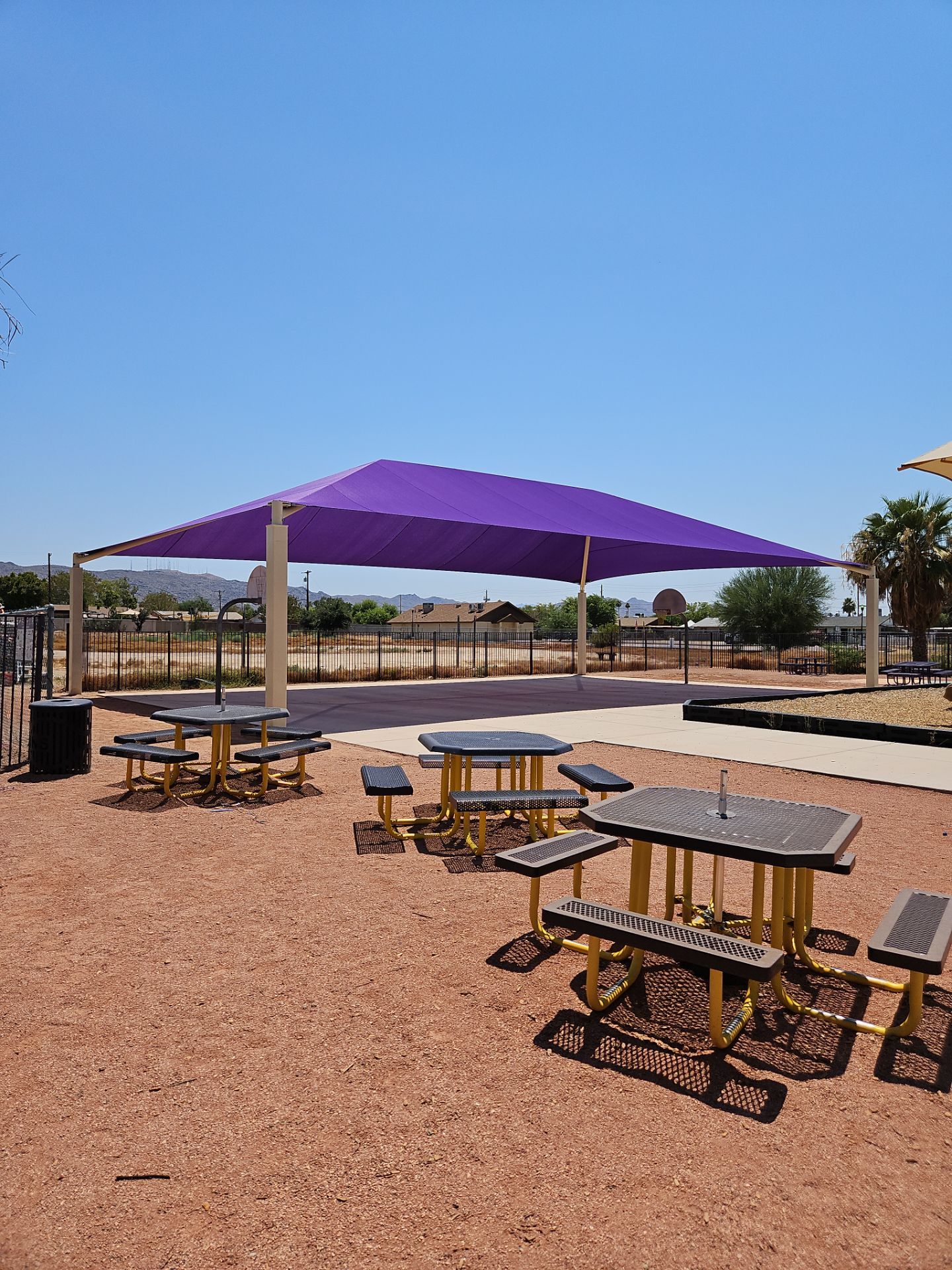
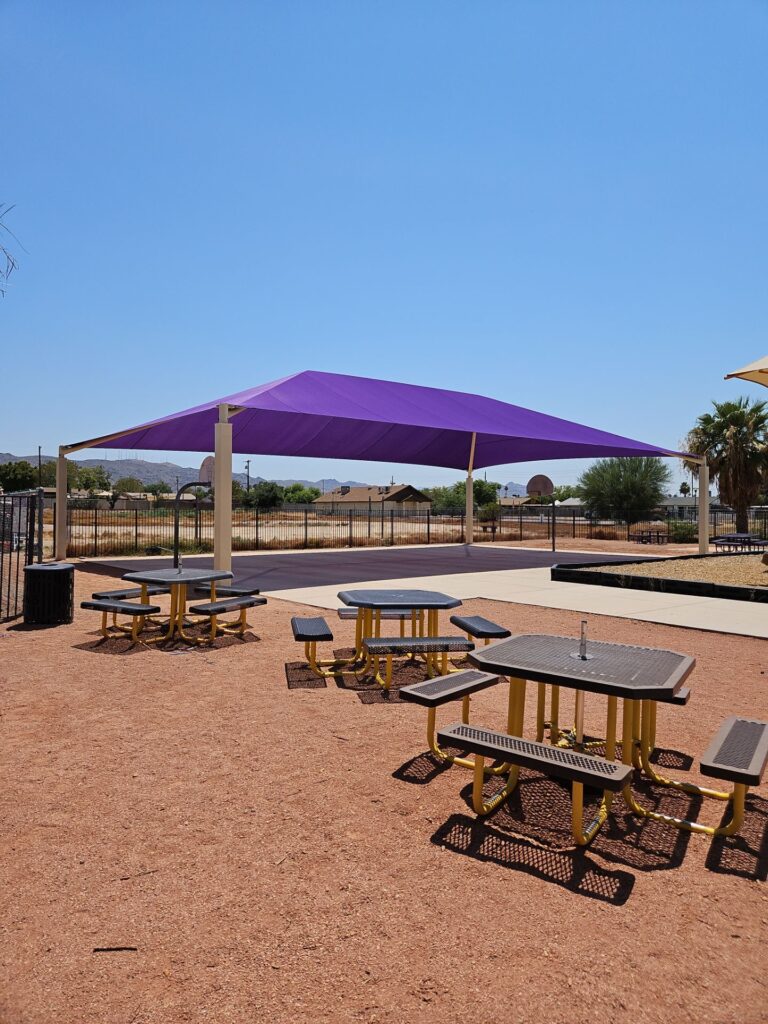
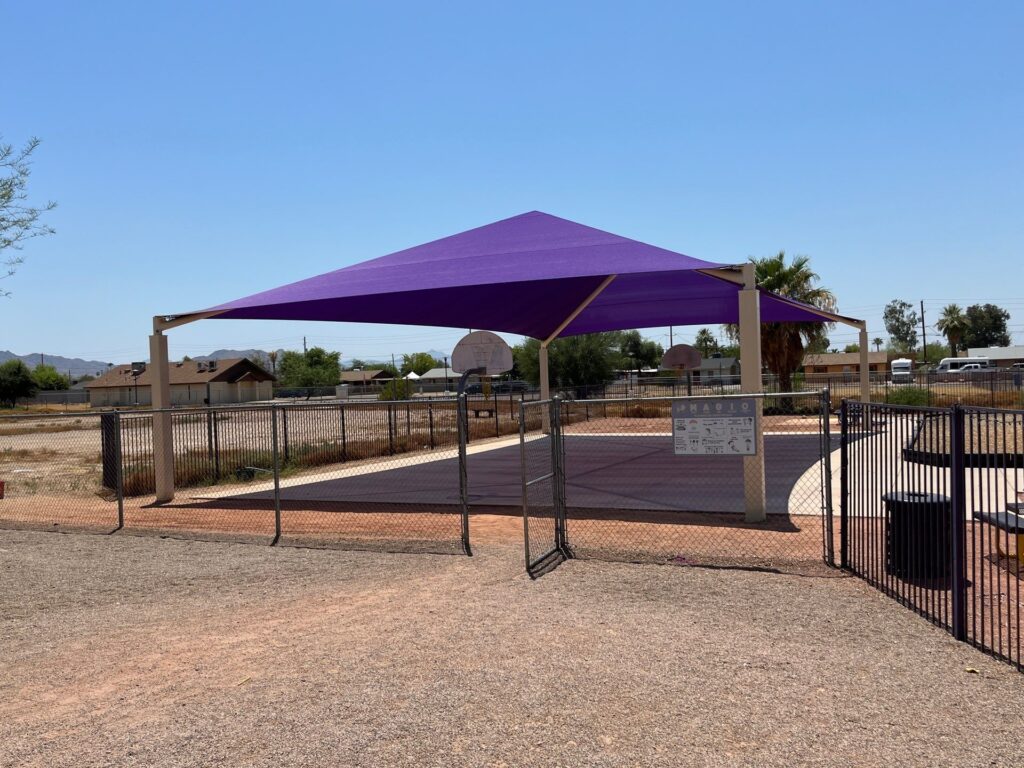
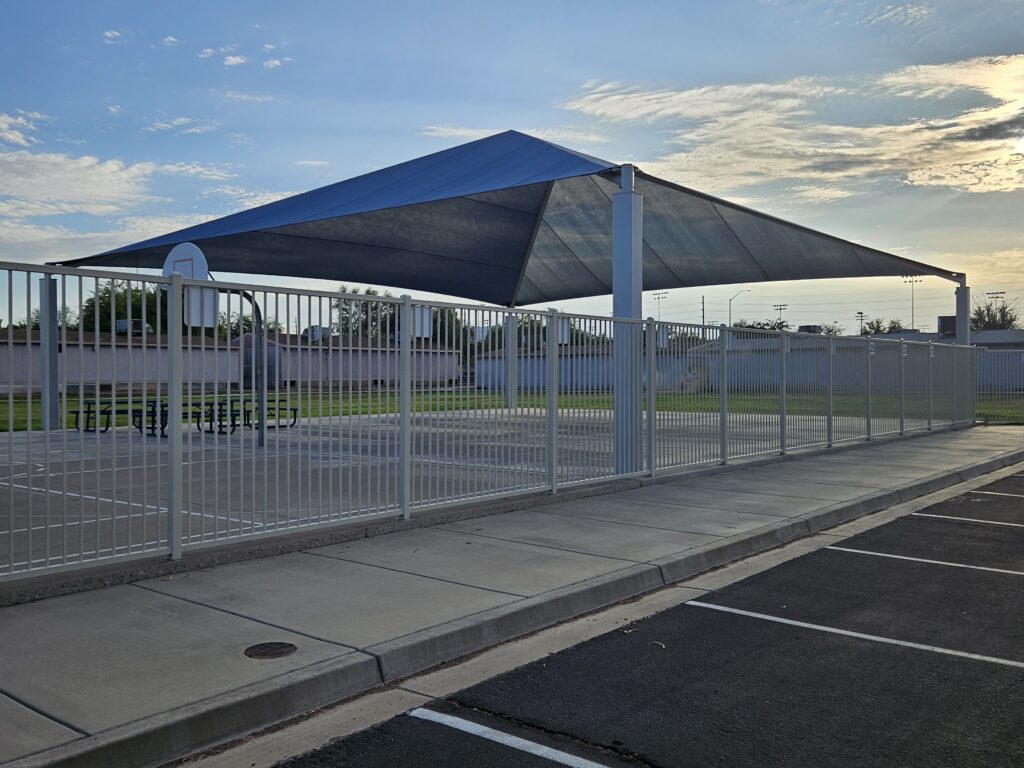
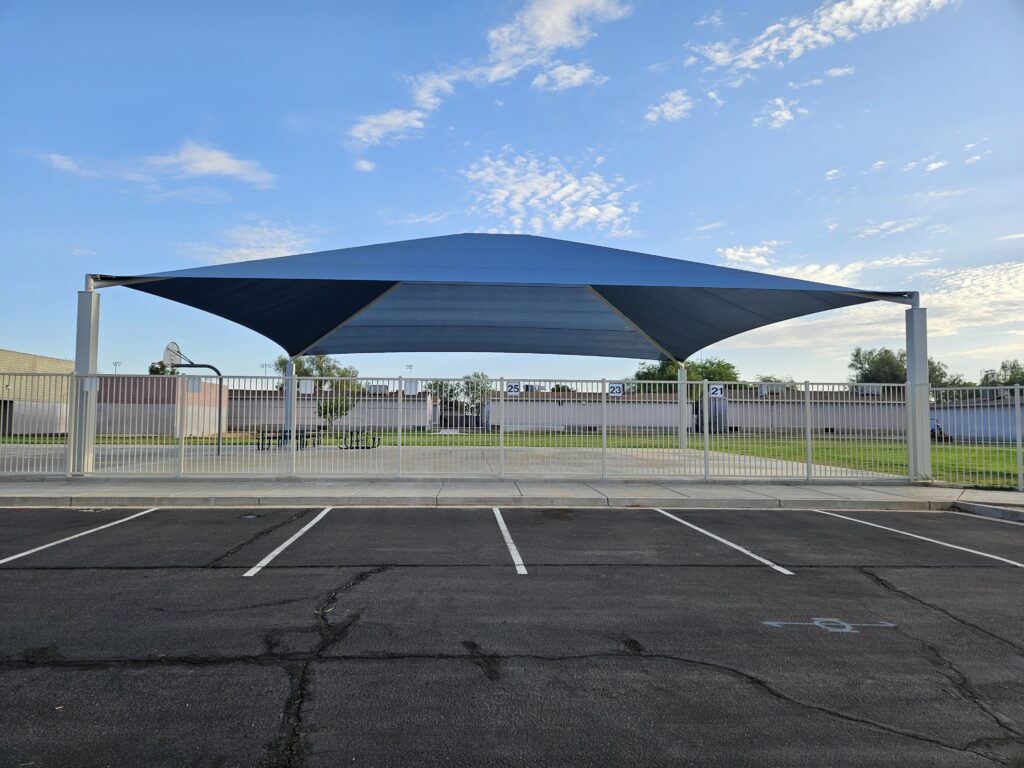
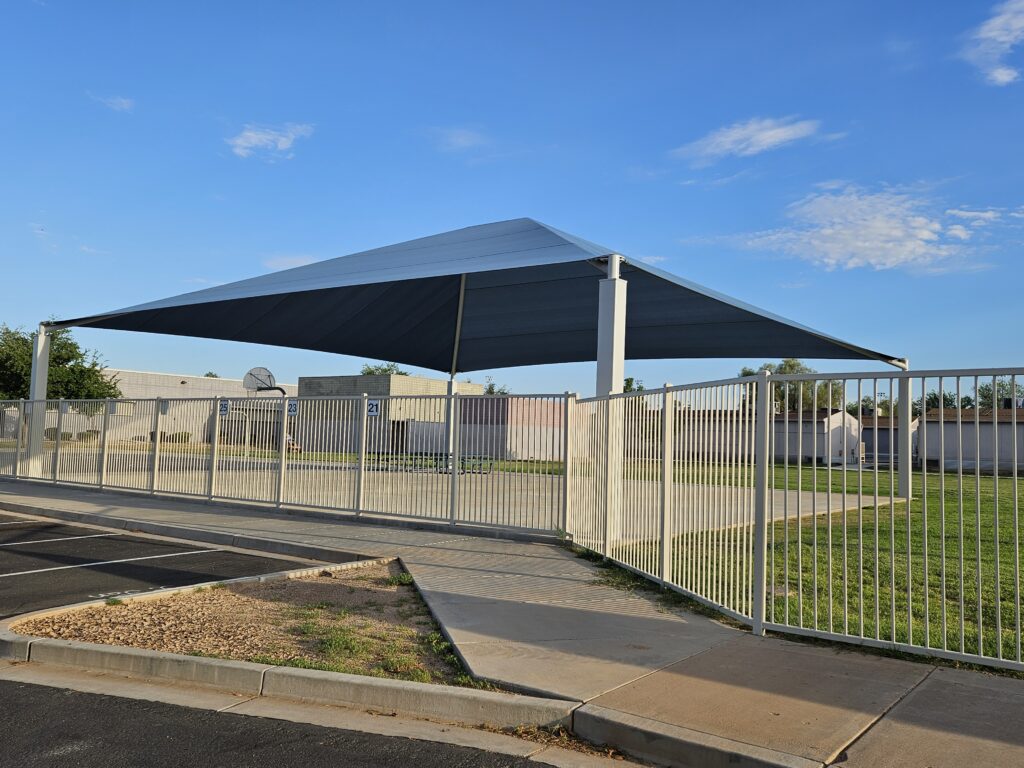
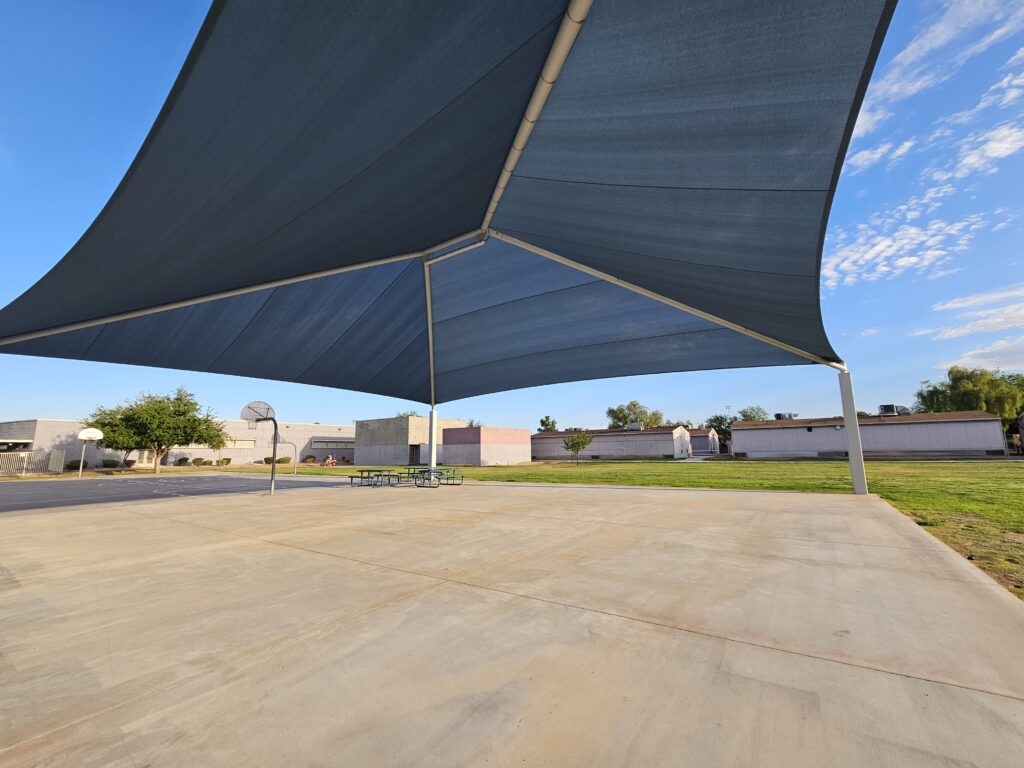
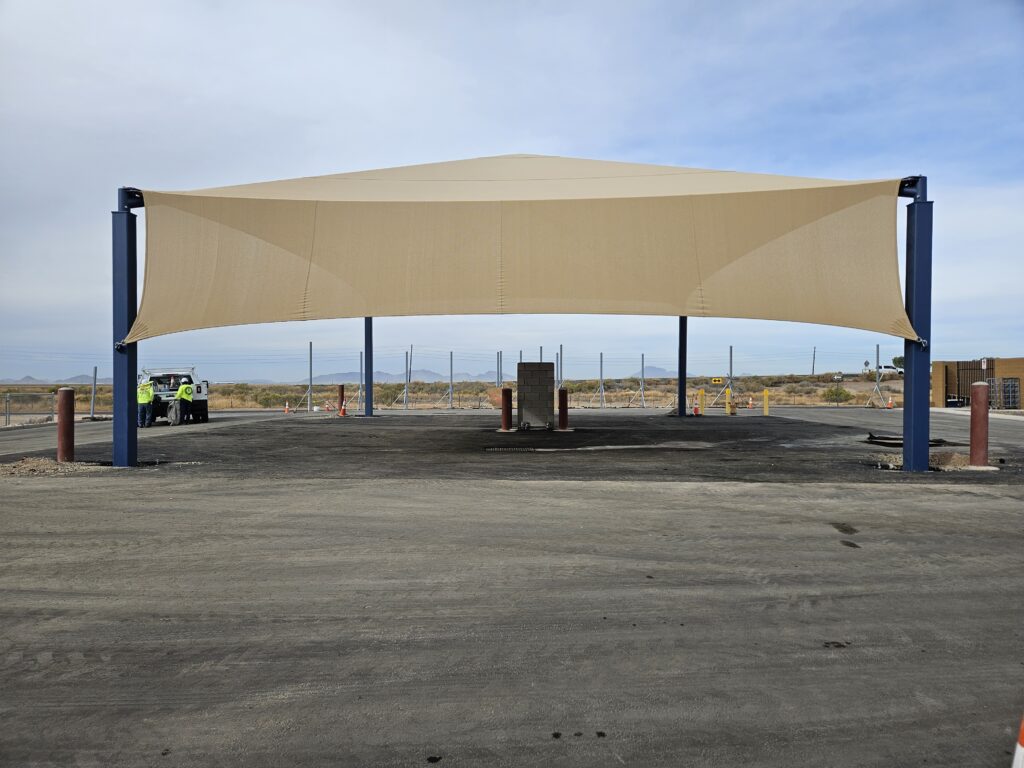
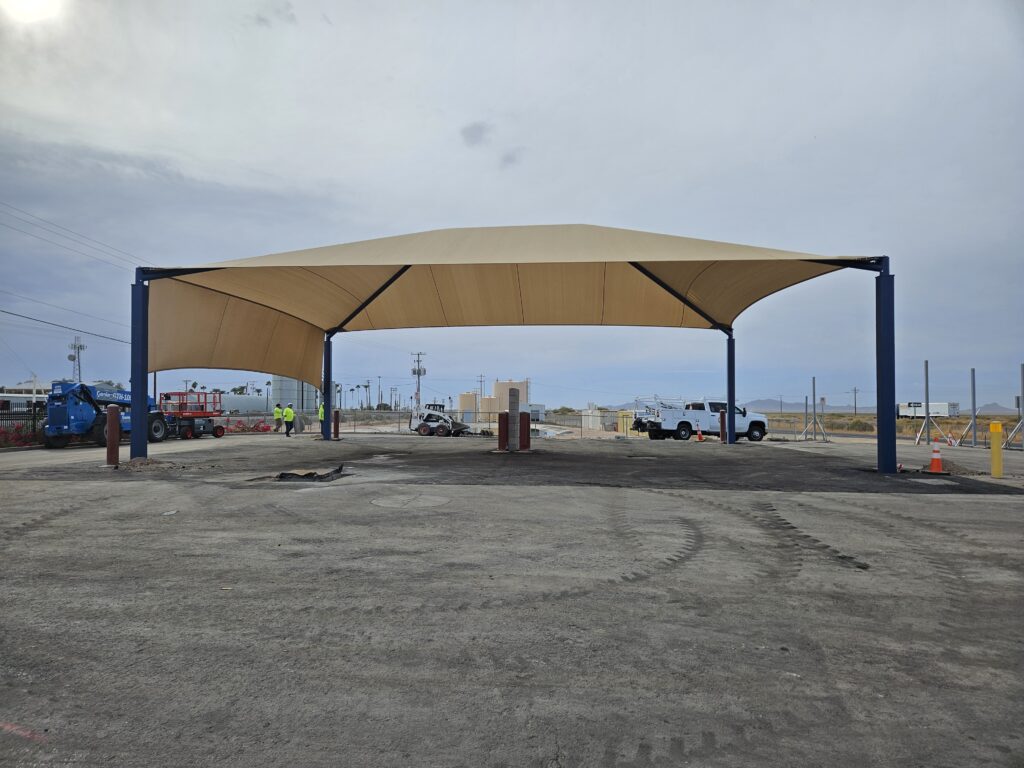
MAX Hip structures are purpose-built for sites where coverage area, clearance, or structural requirements exceed what a standard hip can deliver. The most common applications include:
- Full-court and multi-court sports facilities – Basketball courts, tennis courts, pickleball complexes, and volleyball courts where players and spectators need continuous overhead shade across the entire playing surface or sideline.
- Large playground complexes – Schools and parks with tall play structures, climbing features, and safety fall zones that require high eave clearances and wide, uninterrupted shade coverage.
- Parking lots and vehicle staging areas – Covering full parking rows or vehicle queuing lanes at commercial sites, car dealerships, fleet yards, or transit facilities.
- Multi-table picnic and gathering areas – Parks, HOA amenity areas, church grounds, and corporate campuses where large groups gather for events, meals, or recreation.
- Pool decks and aquatic centers – Shading large deck areas, spectator seating, and concession zones at community pools and water parks.
- Walkways, corridors, and queue lines – Multi-bay configurations creating long, continuous shade runs at theme parks, entertainment venues, and institutional campuses.
See examples of MAX Hip and large-span shade installations in our completed projects gallery.
Heavy-Duty Steel Framework
Every MAX Hip begins with a welded steel frame fabricated in our Phoenix facility using heavier columns and thicker-walled tubing than our standard hip line. The increased steel mass is not optional—it is a direct engineering response to the higher wind, gravity, and seismic loads that larger spans generate. After fabrication, all steel components are powder coated to a minimum of 3 mil thickness, providing a hard, corrosion-resistant finish that withstands decades of direct sun exposure, rain, and temperature extremes. We offer over 25 standard powder coat colors, and custom color matching is available so your structure aligns with school colors, corporate branding, or community design standards.
Shade Fabric Options
Our go-to fabric for MAX Hip structures is Commercial 340/95, a high-performance knitted HDPE shade cloth available in standard, heavy-weight, and FR (fire resistant) configurations. This fabric delivers up to 96% UV block while allowing air to circulate through the knit, keeping temperatures significantly cooler under the canopy than on exposed surfaces nearby.
For projects with specialized requirements, we also source from Polyfab, Alnet, and Serge Ferrari product lines. This gives us the flexibility to specify the ideal fabric for your project’s UV performance, fire rating, color palette, and budget. All of our HDPE shade fabrics are lead-free, phthalate-free, and backed by manufacturer UV degradation warranties.
If you already have a shade structure with worn or damaged fabric, our in-house sewing team can fabricate a replacement canopy to fit your existing frame.
Large-span structures carry higher engineering stakes than standard-size shades. As the footprint grows, so do the wind loads, the footing requirements, and the complexity of the permit review. Total Shade provides sealed structural engineering drawings prepared by licensed engineers for every MAX Hip project. Our drawings include:
- Site-specific wind and seismic load calculations – based on your project’s geographic location, exposure category, and local building code requirements
- Footing and anchor designs – sized for the actual soil conditions at your site, not generic assumptions
- Connection details and column specifications – documenting the heavier steel sections and reinforced hardware that differentiate the MAX Hip from standard structures
- Complete permit-ready documentation – formatted for submission to your local building department, including any supplemental calculations or details required by the reviewing authority
For school and park projects, we also coordinate safety clearances around play equipment, ADA-compliant circulation paths, and fall-zone requirements to ensure the structure integrates safely with existing or planned site features.
Planning a MAX Hip requires careful attention to factors that become more critical at larger scales:
- Column placement and circulation – With more columns supporting wider spans, post locations must be coordinated with pedestrian flow, vehicle traffic lanes, fire access, and any equipment or furnishings beneath the canopy.
- Underground utilities – Larger footings for MAX Hip columns go deeper and wider than standard footings. We identify below-grade conflicts early so footing locations can be adjusted during design, not discovered during excavation.
- Sun path and orientation – On a structure this size, proper orientation can mean the difference between full shade coverage at noon and a strip of unshaded ground right where people gather. We analyze solar angles for your latitude across the seasons.
- Wind exposure – Large canopies catch more wind. We factor your site’s prevailing wind direction, surrounding terrain, and local code wind speed requirements into the structural design.
- Aesthetics and sightlines – A MAX Hip is a prominent visual element on any site. We work with you on fabric and frame colors that complement the surrounding architecture, and we evaluate whether the structure’s profile will obstruct signage, views, or security camera lines of sight.
Not sure which structure type fits your site? Browse our full range of shade products, including 4-point tensioned fabric sails, flat cantilevered structures, and fully custom designs.
A MAX Hip structure represents a larger investment than a standard hip, but it also delivers substantially more coverage per dollar. When evaluating proposals, commercial buyers should assess total cost of ownership over the structure’s expected 15 to 25+ year lifespan, not just the upfront price tag. The table below breaks down the major cost components.
| Cost Component |
What It Covers |
MAX Hip Consideration |
| Structure & Fabric |
Steel frame, powder coat finish, shade fabric, hardware, glide elbows or other options |
Heavier steel and wider spans increase material cost but reduce the number of structures needed |
| Engineering & Permits |
Sealed structural drawings, site-specific calculations, permit application fees |
Larger spans require more detailed engineering; plan for longer review timelines on complex projects |
| Foundations |
Concrete footings, anchor bolts, soil preparation |
MAX Hip footings are deeper and wider to resist greater overturning forces; soil testing is recommended |
| Installation |
Crane mobilization, steel assembly, fabric tensioning by OSHA-certified crew |
Larger structures may require heavier crane equipment and longer installation windows |
| Freight & Delivery |
Transport of fabricated steel and fabric to site |
Heavier, longer steel members may require specialized transport |
| Lifecycle Maintenance |
Periodic cleaning, re-tensioning, steel inspection and touch-up over 15–25 years |
Well-maintained MAX Hips deliver decades of service; deferred maintenance accelerates replacement costs |
Installing a MAX Hip on an active site—a school campus, a busy park, or an operating commercial property—requires more planning than a standard shade install. Total Shade manages these logistics as part of every project:
- Crane access and staging – MAX Hip components are heavier and longer, often requiring larger crane equipment and a clear staging area. We conduct a pre-construction site review to confirm access routes and setup zones.
- Phased scheduling – For schools, we schedule installation during breaks. For commercial properties, we coordinate around operating hours to minimize disruption to tenants, customers, or daily operations.
- Area closures and safety – Our OSHA-certified installation crew establishes work zones, barricades, and safety protocols to protect site users during the installation process.
- Turnkey delivery – From footing excavation through final fabric tensioning and site cleanup, we handle every phase. You deal with one team, one point of contact, and one schedule.
If you are evaluating multiple vendors for a large-span shade project, these are the critical questions to ask:
| Your Question |
What You’re Really Comparing |
Why It Matters |
| How big can I go? |
Maximum span per bay, available heights, multi-bay joining options |
Determines whether the structure actually covers your full activity zone |
| Will it survive here? |
Wind speed rating, snow/live load, steel gauge, sealed engineering |
Liability protection, insurance compliance, and storm resilience |
| Is coverage enough? |
Shade footprint vs. actual use area at different times of day |
A structure that misses the activity zone wastes the investment |
| What’s the real cost? |
Structure + engineering + foundations + install + lifecycle maintenance |
Accurate budgeting; avoid surprises from excluded line items |
| Does it elevate the site? |
Canopy form, color options, visual scale, integration with surroundings |
Community acceptance, brand perception, and long-term site value |
- 25+ years of large-span shade experience – We have designed and installed MAX Hip and super-span structures for school districts, municipalities, national brands like Six Flags and Amazon, and major general contractors across Arizona and the Southwest.
- Complete in-house capability – Design, engineering coordination, steel fabrication, fabric sewing, and installation are all performed by our own teams from our Phoenix headquarters. No middlemen, no finger-pointing.
- OSHA-certified installation crew – Large structures require rigorous safety practices during erection. Our field team is trained and certified to the highest standards.
- Proudly made in the USA – All fabrication happens domestically, giving us quality control and lead-time advantages over imported products.
- Single point of accountability – From the first site visit through final punch list, you work with one team that owns every phase of the project.
See what our clients say about working with us on our testimonials page.
Whether you are still exploring options or have a specific site and budget in mind, we are ready to help. We will evaluate your site, review your coverage and clearance requirements, recommend the right structure and materials, and deliver a detailed proposal—all at no cost or obligation.
Call us today: (602) 265-0905